
STACK AND PIN TECHNOLOGY
The stack-and-pin technology is designed so the elements of the grille slide into each other, rather than relying on a rolling grille and barrel system. This means that up to 20 times less storage space is required.
Why traditional rolling grilles require more space
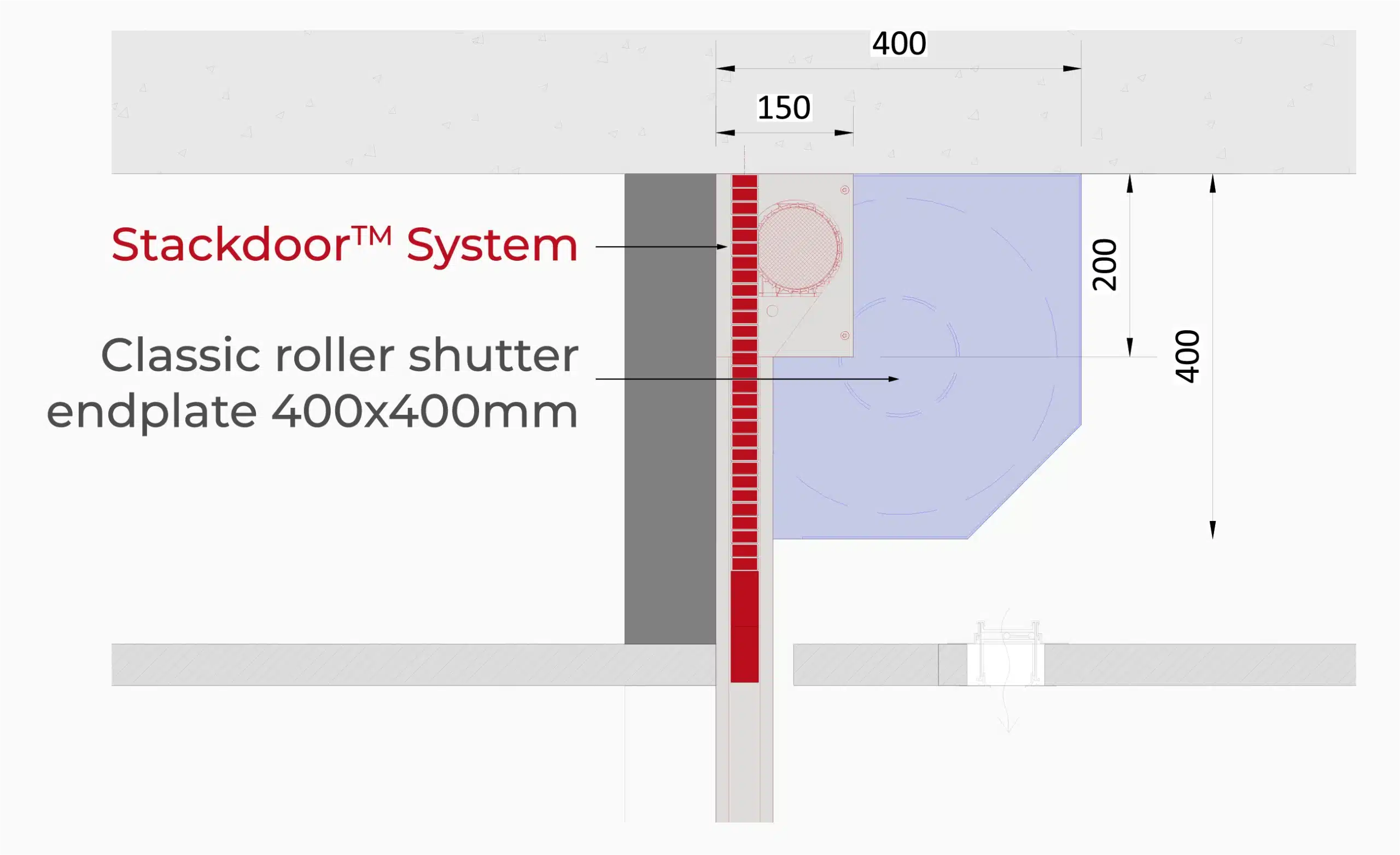
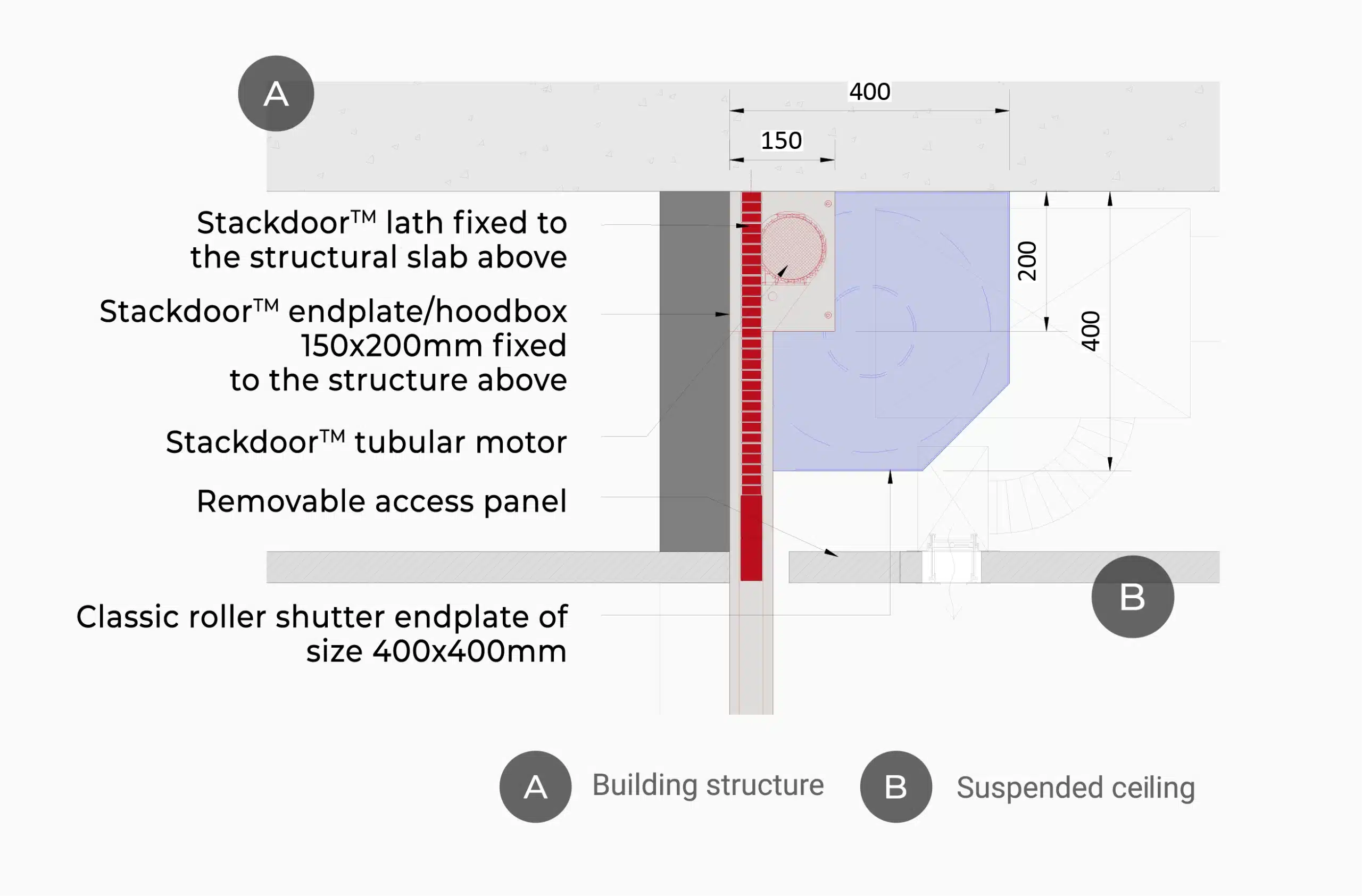
Traditional rolling grille systems rely on a large barrel, deep hood box, and oversized end plates, requiring significant space above the opening.
The blue overlay shows the depth and end plate size a conventional rolling grille would require for the same size opening, compared with the more compact Stackdoor® stacking system.
As a result, Stackdoor can be installed where available headroom is limited.
Why traditional rolling grilles require more space
Traditional rolling grille systems rely on a large barrel, deep hood box, and oversized end plates, requiring significant space above the opening.
The blue overlay shows the depth and end plate size a conventional rolling grille would require for the same size opening, compared with the more compact Stackdoor® stacking system.
As a result, Stackdoor can be installed where available headroom is limited.
STANDARD STACKDOOR INSTALLATION
The slimline grille stacks to a compact size behind the motor, ensuring it can sit behind any pipework, air conditioning or heating systems that may be installed.
STACKDOOR WITH HIGH STACKING OPTION
If services or pipework are set against the ceiling, and space is at a premium, the Stackdoor motor can pull the stacking grille up above the level of the motor.
Flexibility in the positioning of the tube motor, means the stacking grille can slide neatly up behind other services, taking the absolute minimum amount of space.
STACKDOOR WITH ‘DOUBLE-STACK’ SYSTEM
In environments with limited space between the building structure and the suspended ceiling, a standard rolling grille is often not feasible because the rolling mechanism is too large for the ceiling void.
Where entrance height requires the Stackdoor stacking height to be reduced further, Stackdoor can still offer a solution.
In these cases, a ‘double-stack’ grille can be designed to achieve the minimum possible installation height while maintaining a shallower depth than an equivalent rolling system.